Work
One product in beta, three LLM apps you can try right here, and the computer vision projects behind them.
Featured project
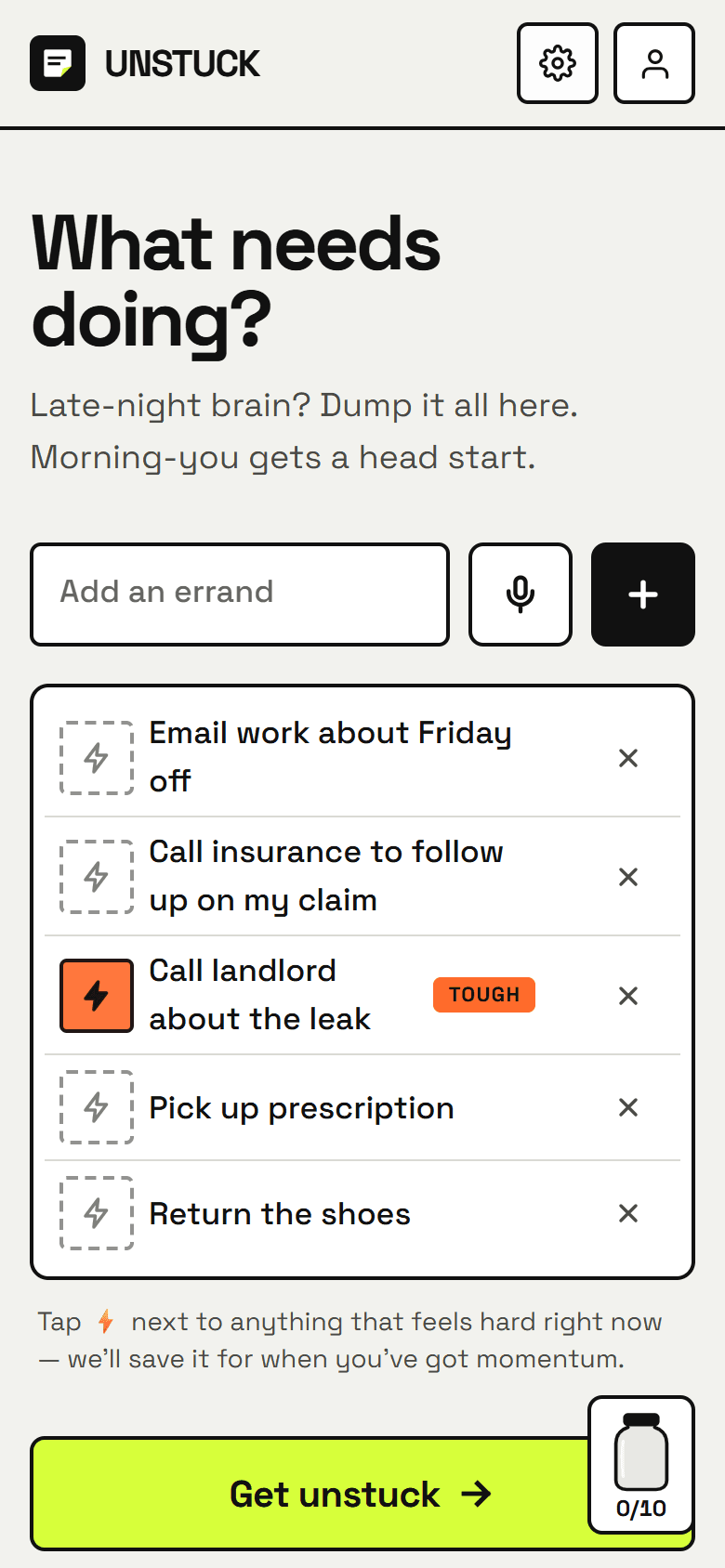
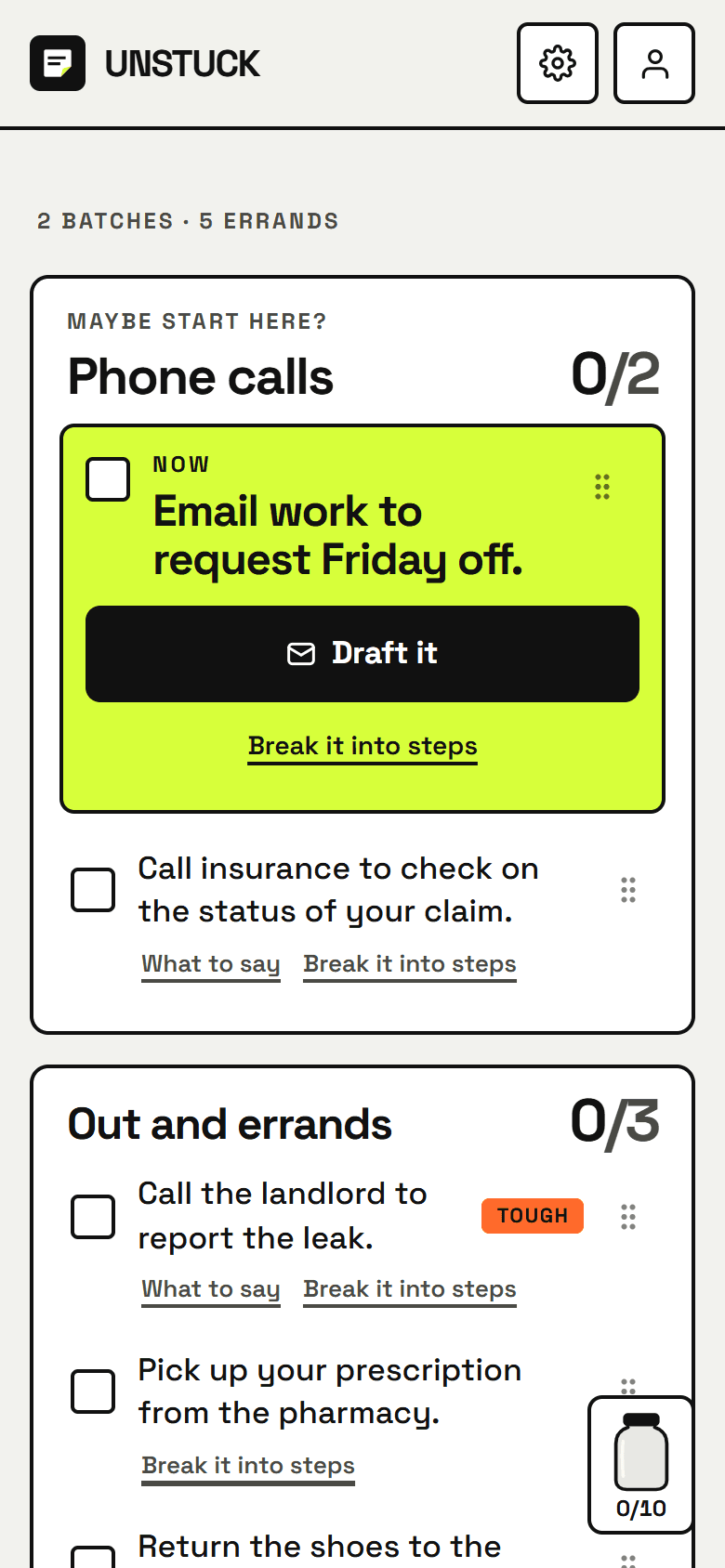
Unstuck
An AI to-do app for people who freeze at a long list.
Live · invite-only beta
You throw your whole messy list at it. It groups the tasks into batches you can do in one go, picks where to start, breaks scary tasks into small steps, and writes the exact words for phone calls and emails, with nothing left for you to fill in.
What I built
- LLM pipeline that sorts, batches and breaks down tasks, with call and email scripts that tell admin calls apart from personal ones
- Accounts and cross-device sync on Supabase, with row-level security and a code-based closed beta
- Reminders that arrive as real push notifications, sent by scheduled jobs
- Focus mode, voice input, accessibility settings and five languages
- Next.js
- TypeScript
- AI SDK
- Claude
- Supabase
- Web Push
- Vercel
Live demos
Booking agent
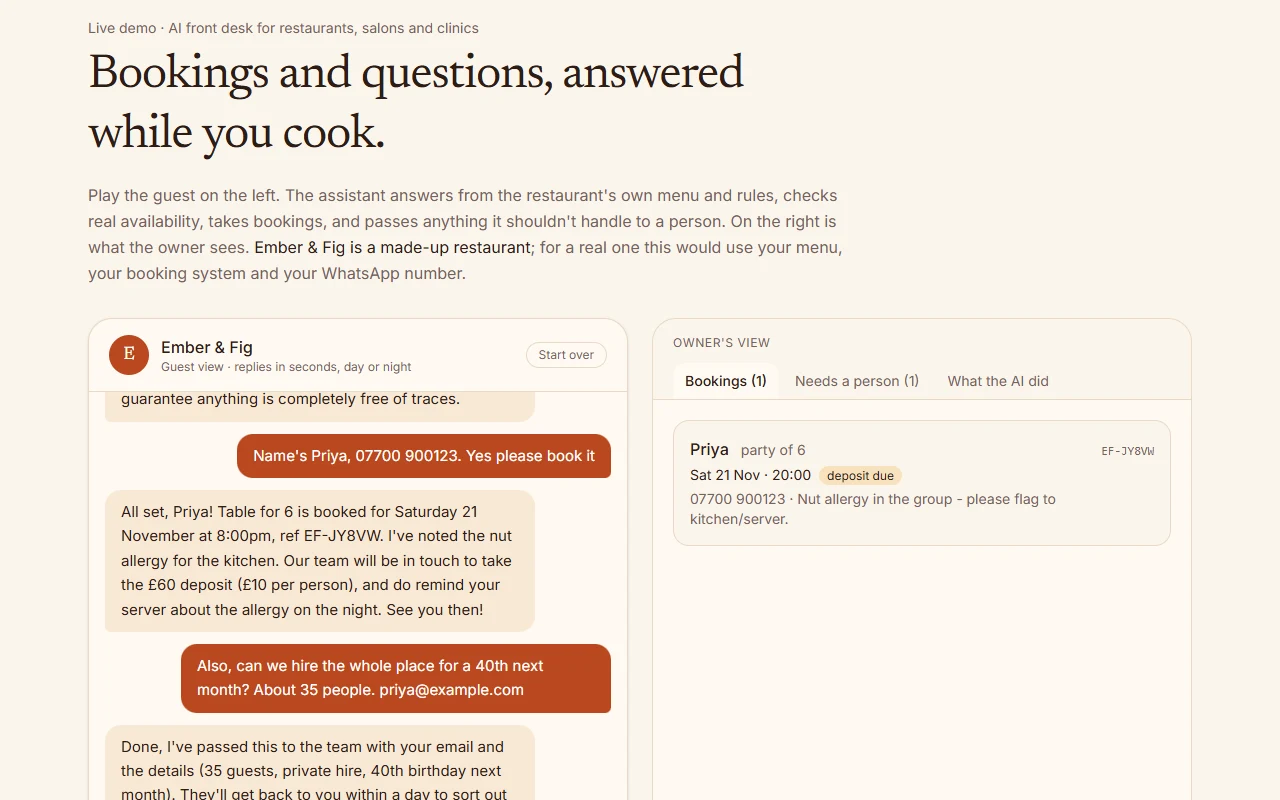
FrontDesk
Answers your guests' questions and takes bookings day and night, and hands the tricky ones to you.
An AI host for a demo restaurant. It looks up the menu and allergens, checks free tables, books only after the guest confirms, and hands big groups, private hire and complaints to staff. The owner's view shows bookings, hand-offs and every tool call.
- AI SDK
- Tool calling
- Next.js
Tool-calling agent
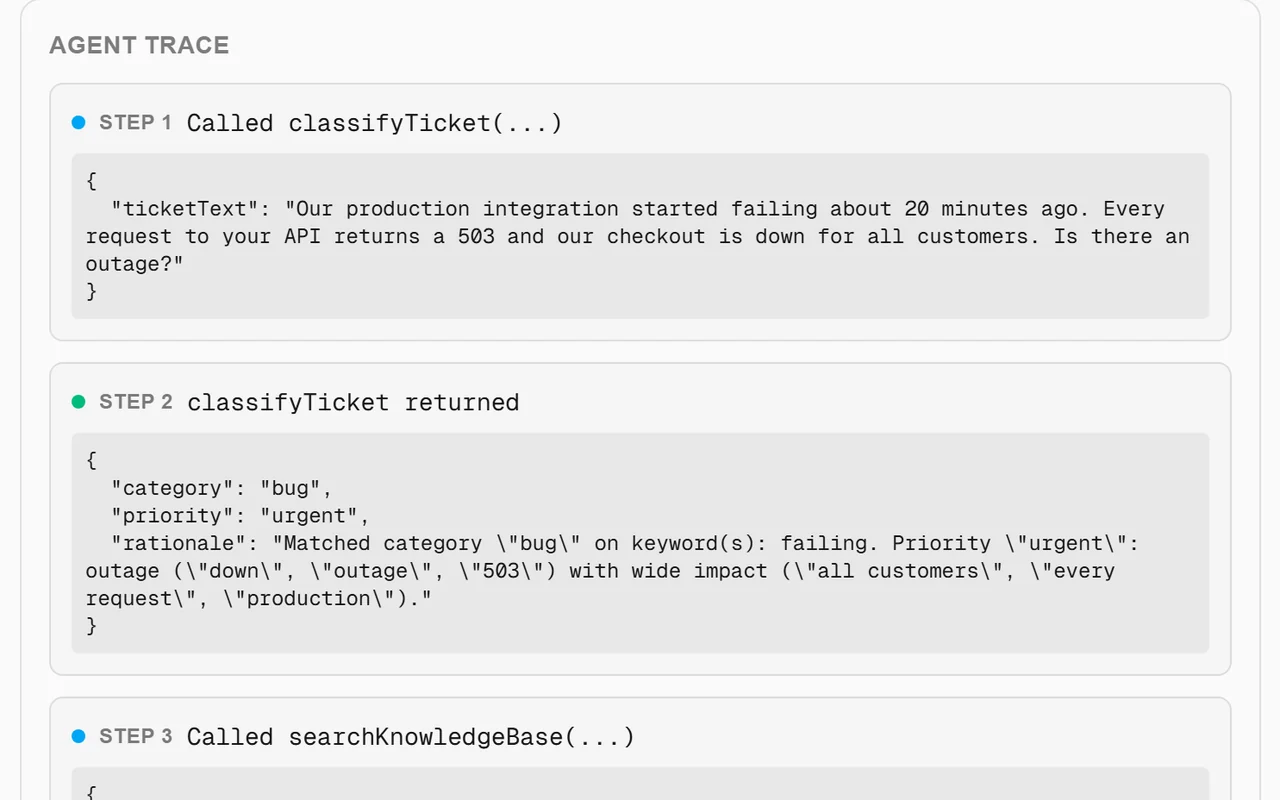
TriagePilot
Sorts your support inbox and drafts replies for your team to approve.
An agent that triages support tickets step by step: it classifies the ticket, searches a knowledge base, then drafts a reply. Every tool call and result is shown as an inspectable trace.
- AI SDK
- Next.js
- TypeScript
RAG
docuchat
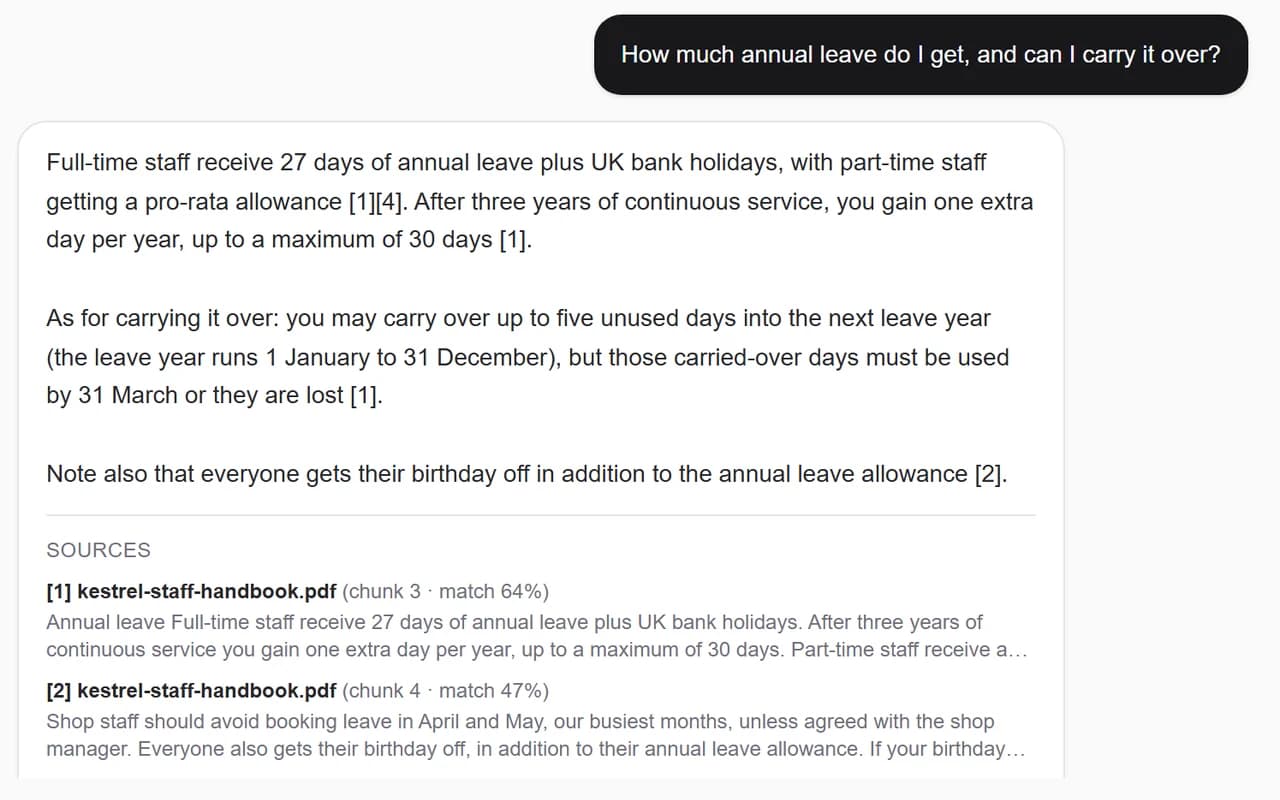
Lets your staff get answers from your own documents in seconds, with sources.
Upload PDFs, Word docs or notes and ask questions. Answers come only from your documents, with citations to the exact chunk they came from. Hand-rolled chunking, embeddings and cosine retrieval, no vector database.
- AI SDK
- Embeddings
- Next.js
Structured extraction
Extractly
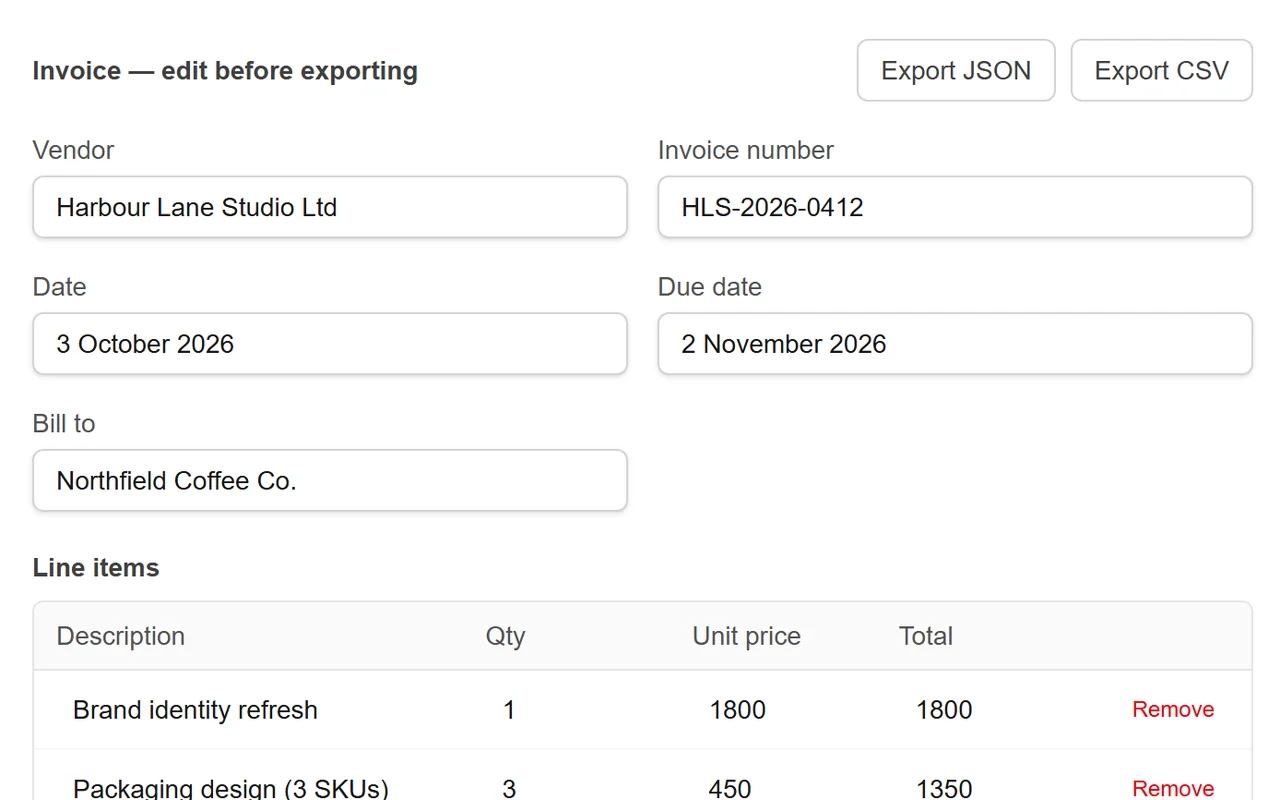
Turns piles of invoices and forms into spreadsheet-ready data, no retyping.
Turns invoices, receipts and CVs (images or PDFs) into clean, schema-validated JSON using a vision model, with inline editing and CSV or JSON export.
- Vision LLM
- Zod
- Next.js
Research & ML
- GitHub
Chest X-ray classifier · Computer vision
DenseNet121 (the CheXNet architecture) fine-tuned on NIH ChestX-ray14 to spot 14 findings at once, trained with BCE loss and evaluated with per-label AUROC.
- PyTorch
- DenseNet
- Multilabel
- GitHub
Facial emotion recognition · Computer vision
Reads seven emotions from face images in FER2013. A VGG19 fine-tuned with class-weighted loss reached 68.6% accuracy, against 52.7% for a custom CNN built from scratch.
- PyTorch
- fastai
- Transfer learning
Hiring, or have a project in mind?
Let's talk.
Tell me what you're trying to do and we'll set up a free call to talk it through, including cost.
adjeteimartey@gmail.com